High school is the first and last time that the majority of athletes will get to participate in organized sports. Only about 7% of high school athletes go on to compete at a collegiate level, and just a fraction of that group will continue at the professional level.
That’s why the high school athletics experience is so unique, and why Green Level High School Athletic Director Colin Fegeley does his best to create a collegiate experience for his high school athletes.
"I want to give our kids a collegiate-type experience. That's my vision statement. We know that most won't participate in college, but we want to make these four years as close to that as possible."
WATCH: Colin on the importance of creating a collegiate-level experience
Colin has developed that vision statement into a game plan that includes strengthening relationships with local sponsors, driving ticket sales for all events, leading with digital recognition, and maintaining a consistent brand. We’ll break down the strategies and tools he uses to give his athletes an unforgettable experience.
What elements of the collegiate experience can be applied to high school athletics?
It’s important to keep in mind that collegiate programs have extensive funds and resources to create an elite-level experience for their athletes — much more than high schools have at their disposal.
When we talk about a collegiate experience, we don’t mean that you have to strive to give every team brand new gear every year or carve out state-of-the art facilities that are exclusive to athletes. Those elements of the college experience are not feasible for most high schools.
But there are a number of qualities of the college experience that don’t require expanded budgets or long-term investments. We’ll focus on four that Colin uses as a foundation for his vision:
- Building a consistent, professional brand
- Digital recognition for all athletes
- Driving ticket sales & community support
- Implementing local sponsorships
Building a consistent, professional brand
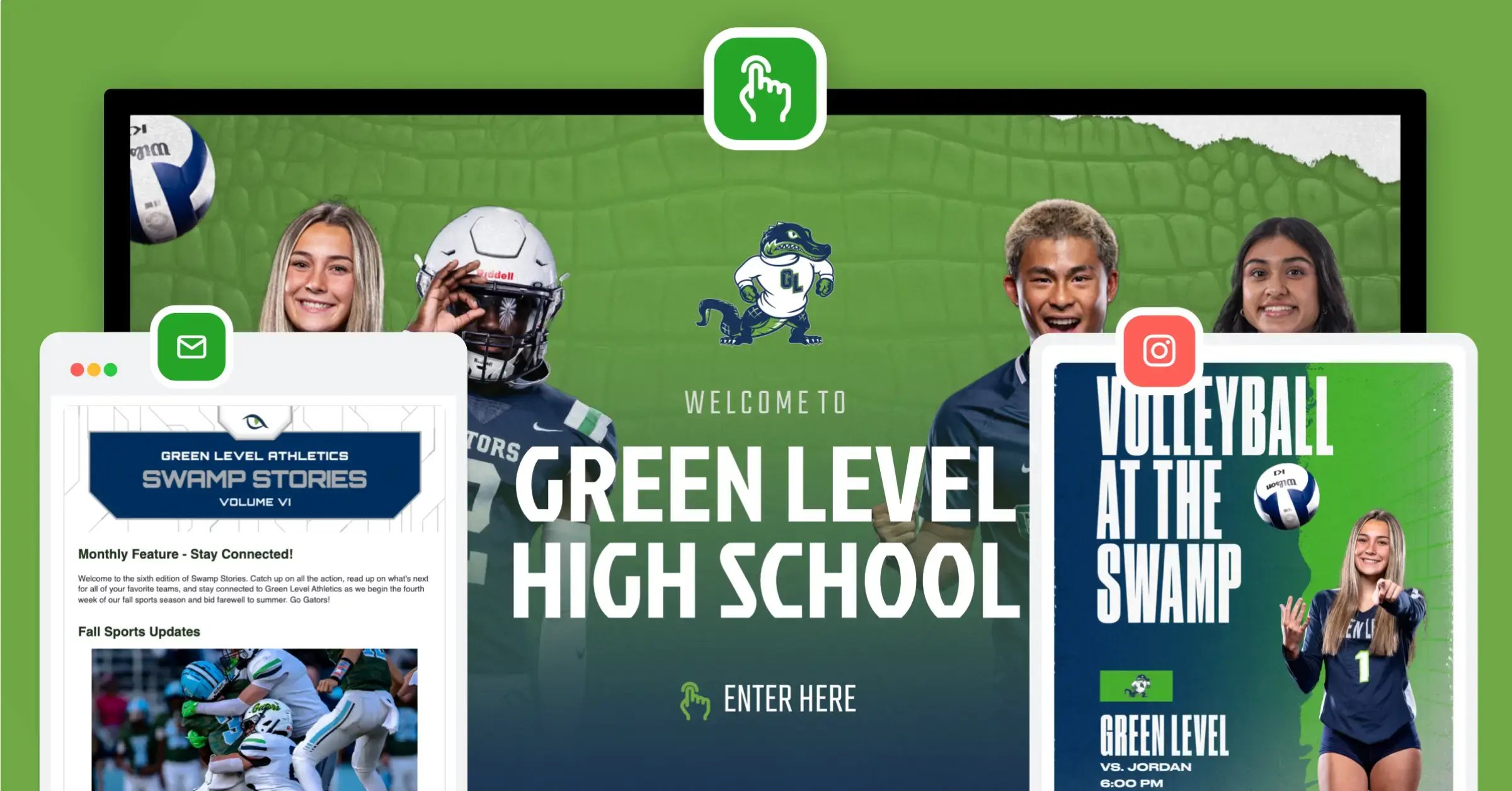
Walk through a college campus on gameday and you’ll probably notice that everyone — fans and athletes alike — are wearing the same logo and the same colors. That branding matches the posters on campus, the programs at the event, and even the gameday graphic that was posted on social media.
Collegiate athletic departments understand that strong, unified branding means a strong sense of pride that bonds school and community. That’s why they don’t just invest in branded gear and spirit wear — they invest in making sure their logos are used properly and their colors are always the same, whether online or on campus.
For Colin, treating your high school athletic department like a brand is one of the most important things you can do to recreate a collegiate experience, especially because “high school is probably the most significant brand in [student-athletes’] lives.”
The good news is that creating a consistent brand for your school is relatively easy:
- Determine your official athletics logo and colors. Meet with your principal or school communications team to see if they have already put together brand guidelines you can follow.
- Ensure you use the same logo, colors, and fonts across your digital communications. Whenever you post a graphic on social media or send a digital newsletter, make sure they have the right brand assets.
- Align on-campus branding with digital branding. Your online presence should be consistent with your on-campus experience, and vice versa. If you have wall wraps, a digital hall of fame, banners, or new apparel, check and see if the logos and colors match your official branding.
Pro tip: Gipper Engage and Gipper Touch make it easy to ensure your brand is consistent everywhere, from social posts to interactive halls of fame. Upload and store your official logos, colors, and fonts, then automatically apply them to your content.
High school athletics branding comes down to the famous quote from Deion Sanders, “Look good, feel good, play good.” When you look like a team, you’re more likely to feel like a team. And that helps you play like a team.
Digital recognition for all student-athletes
Collegiate athletic departments put their athletes front and center. Their faces are on posters around campus, they’re doing interviews with local and national media, and meet and greets with fans. College fans know athletes by name, and they show up to events just to see them in action.
The key to a successful collegiate experience for high school athletics? Building it around people.
For Colin, there are two main reasons why he highlights every success story coming out of Green Level:
- “We have so much to celebrate on a daily basis and we really want to do that for our student athletes because they deserve it.”
- “It really goes a long way with our community and their families to build a lot of goodwill.”
So how can you achieve this at the high school level without adding more work to your plate? Here are a few things you can start doing today:
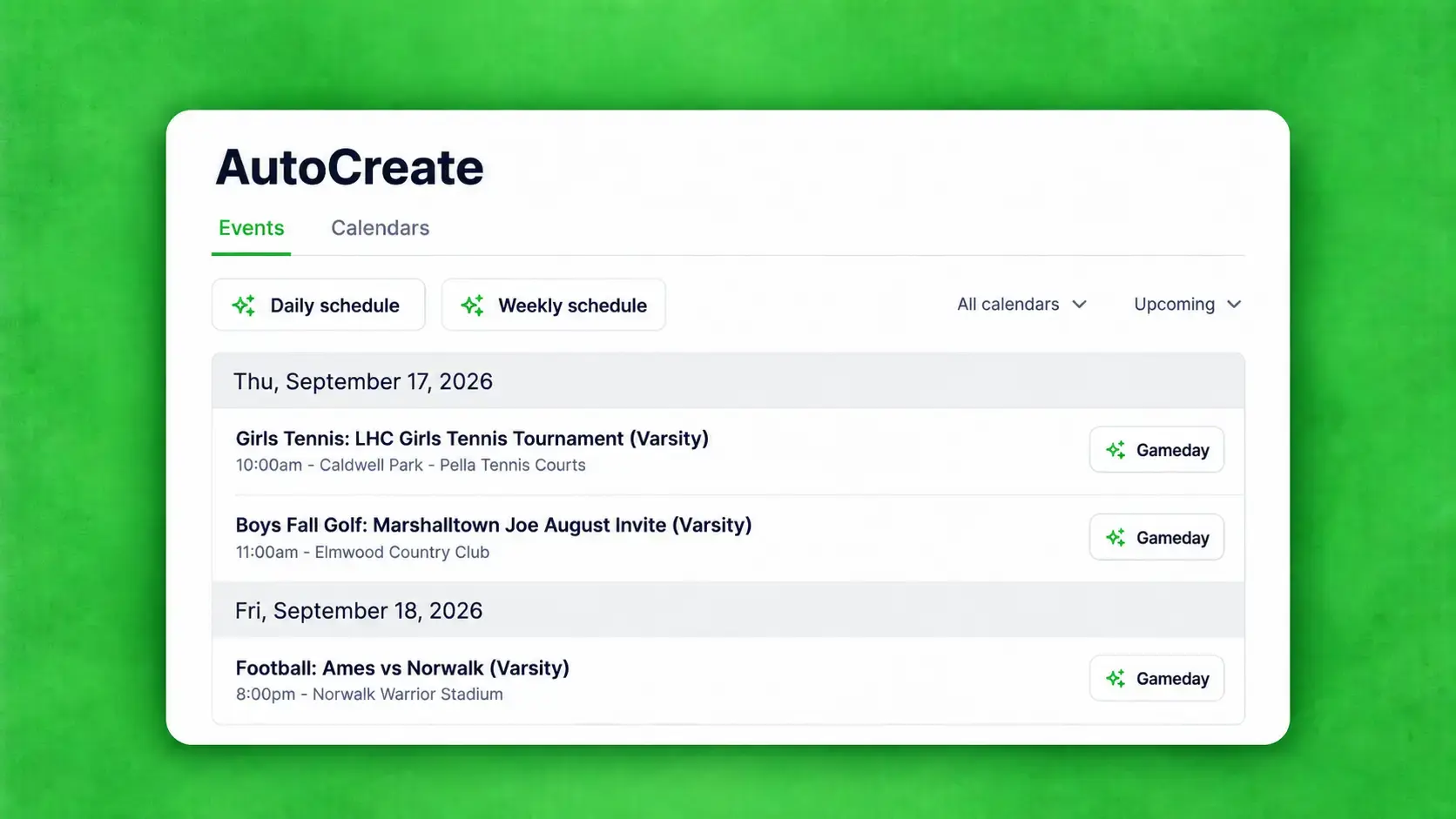
Start posting a weekly schedule on social media
Colin likes to include every event happening in his athletic department on his weekly schedule graphic so that each sport gets highlighted at least once. Plus, parents and fans will form the habit of checking social media for this information first, saving Colin from too much one-on-one communication.
“Simply putting out a weekly schedule every Sunday like we always do for our families, saves me a ton of time throughout the week because I'm not constantly getting emails from parents, members of our community asking about when the game is or where we're playing tonight. It's all out there and folks know where to find it.”
Build a digital newsletter
Digital newsletters can help you get more information out at once and highlight teams that maybe wouldn’t get the spotlight otherwise, “Our women's cross country program who have won four straight conference titles and two straight regional titles, and a few weeks ago, the state championship. If it wasn't for our newsletter, a lot of members of our own community would not know about all the amazing things that are happening in our school.”
View an example of Green Level's monthly newsletter "Swamp Stories"
No need to go overboard on your newsletter, either. Colin recommends a monthly cadence to get started, “Monthly is really a perfect time to hit some of the major highlights of what happened in the preceding weeks and project forward to future events.”
Implement interactive recognition (like a digital hall of fame)
One way to go above and beyond with your recognition is to transition to a digital hall of fame. Many college athletics facilities include interactive touchscreens that showcase digital halls of fame, awards, athletics history and more.
These interactive experiences aren’t just for colleges anymore— more and more high schools are implementing digital halls of fame and seeing community engagement skyrocket.
When Colin recently unveiled his new touchscreen display, he immediately noticed a boost in engagement from fans, “One night I walked out of the gym after a wrestling event and saw eight or 10 parents surrounding the touch display… looking at several former wrestlers and all the information that's on there. It has really boosted our game day experience.”
For Colin, his interactive touchscreen is another channel for him to tell the stories of Green Level athletics and spotlight the athletes and staff who have helped shape its history. When you tell more stories, you form deeper connections with your community and strengthen school pride.
Explore more ideas from Colin on boosting digital recognition at your school
Driving ticket sales and community support
Probably the most notable element of the high school experience (that can often be overlooked): fans.
Every high school athlete dreams of running onto the football field or the track to a packed stadium — not an empty seat in the house, the cheers deafening, and the energy unlike anything they’ve felt before.
That’s usually not the reality for many high school programs — but it doesn’t have to be that way. It’s crucial as an athletic director that you encourage your community to show up for your teams in every way you can to create that collegiate gameday atmosphere.
For Colin, event promotion is a key part of his strategy. He posts weekly schedules and gameday promotions for all sports on social media. In his digital newsletters, he includes direct links to buy tickets so it’s super easy for his community to show up for Green Level athletes.
Colin is even including QR codes to purchase tickets on his new interactive touchscreen, “A couple weeks ago we had a really long line at a volleyball game for tickets. We actually started directing people over to the touch display so they could scan the QR code and just buy their tickets right there.”
The bottom line: make it as easy as possible for your community to show up and support your teams.
“When people know where to go, you’re going to see more people show up.”
Local sponsorships
Colin is a huge proponent of high school athletic directors creating sponsorship programs at their school because he knows how valuable a school’s connection to the community can be for local businesses.
“Sponsors really just want to know, ‘Will people see my brand?’ So when you make your graphics consistent, you make your message consistent, and then you plug a sponsor in there, they’re not just buying a donation. They’re buying visibility. They’re buying your reach to local families. That’s what they want.”
Schools have a ton of “digital real estate” to offer to sponsors. Inquire if any business would be interested in paying for advertising space on your website, digital scoreboards, social media posts, newsletters, or other digital channels. These are all assets that get a lot of eyeballs from parents, fans, athletes, and other community members.
Local businesses see an advantage to getting their logo on those spaces, as it increases their visibility in your community and strengthens their brands. And, in practice, this can be as simple as adding a sponsor logo to your weekly athlete spotlight posts or a link to your sponsor’s website at the end of your monthly newsletter.
It’s important to keep in mind that no following is too small for social media sponsors — you don’t have to have thousands of followers to make a sponsored post valuable.
“Your sponsor can get 450 profile views off one of your posts. That’s good. A lot of ADs don’t realize they can use that as sellable proof,” says Colin. “You can show that and say, ‘This is what you get when you’re attached to our content.’”
Sponsorships of any kind can help drive revenue to support your programs and contribute to exciting experiences. But they can also foster a strong bond between your school and the greater community, which is a crucial element of creating a collegiate experience.
Your playbook for creating a collegiate experience at your high school
Creating a collegiate experience for high school athletes is about culture, pride, and recognition. Whether you’re already putting some of these activities into practice or you’re starting from scratch, here are some first steps you can take to build a collegiate experience in your athletic department:
- Create brand guidelines for your digital communications.
- Outline weekly social content that spotlights your athletes and teams.
- Try out a digital newsletter that showcases upcoming events and highlights recent stories.
- Include links to buy tickets in your social posts and digital newsletters.
- Ask local businesses if they’d be interested in sponsorship opportunities.
- BONUS: Look into implementing a digital hall of fame to boost engagement and preserve school legacy.
Our biggest piece of advice: Invest in a tool that helps you do it all. For Colin, that tool is Gipper — Gipper Engage and Gipper Touch work seamlessly together to make creating social media content, digital newsletters, and interactive halls of fame easy. Save time and boost your athletics experience for your student-athletes.
Take it from Colin, these small steps make big impact, “These types of investments have gone a long way in creating an awesome game day experience for our student athletes and led to great involvement from local businesses. Everyone has seen the reputation and goodwill that we've built in the community...and they want to be a part of it.”

Frequently asked questions
What does a “collegiate experience” mean for high school athletes?
Creating a collegiate experience for high school athletics means creating a professional, pride-filled environment through consistent branding, athlete recognition, community support, and sponsorships — without needing college-level budgets.
How can high schools recognize athletes effectively?
Digital tools like weekly social media spotlights, newsletters, and interactive halls of fame to highlight all athletes and celebrate their achievements. Platforms like Gipper Engage and Gipper Touch help high school athletic directors boost digital recognition without adding more work to their plates.
How can schools increase community support for athletics?
High school athletic directors can promote events with easy ticket access, engage local businesses through sponsorships, and maintain consistent digital and on-campus branding to encourage attendance and community involvement.
Related articles
.webp)