
.png?width=780&height=446&name=freepik_smiling-athletic-director-adult-male-reviewing-marketing-on-tablet-modern-athletic-office-screen-with-photos-and-athletes-playing-behind_0001%20(1).png)
Nobody hands you a marketing job description when you step into the AD role. You studied education. You coached teams. You learned budgets, compliance, scheduling, and facilities. You built relationships with parents and principals and got really good at putting out fires.
Marketing? That wasn't part of the deal.
Except it is now — and it has been for a while, whether you've named it that or not. The way your community finds out about your program, the way your student-athletes get recognized, the way your school's athletic brand lives or dies in the digital world — that's on you. It always was. But the stakes are higher now than they've ever been, because the landscape your program competes in for attention has completely changed.
This post breaks down what changed, what's at risk if you ignore it, and what the best programs are already doing — including a concrete example of a school that went from zero social presence to over a million impressions in its first year.
Why does marketing matter for athletic directors?
Athletic directors now control the primary channel through which their programs are seen, remembered, and supported — and most of them didn't sign up for that.
Twenty years ago, you didn't need to think about marketing your program. There was an infrastructure that handled it for you. Local newspapers sent reporters to your games. TV stations covered the big matchups. Parents told neighbors at church. The Friday night scoreboard was in the local paper by Saturday morning. Attention flowed naturally to high school athletics because there wasn't much competing for it.
That infrastructure is largely gone.
Local sports coverage has been gutted across the country. Newsrooms have cut dedicated sports staff, replaced them with freelancers, or eliminated prep sports coverage altogether. The communities that depended on that coverage — including your program — are now on their own.
At the same time, the audience you're trying to reach has migrated almost entirely to digital platforms. According to the Pew Research Center, nearly half of U.S. teens say they're online almost constantly, and the average teen now spends close to 5 hours per day on social media. That's not a distraction from their real lives — that's where their real lives happen.
Your student-athletes live on Instagram, TikTok, and YouTube. Their families check Facebook. Your alumni scroll LinkedIn. The conversations about your program — the recognition, the celebrations, the stories — are either happening there or they're not happening at all.
The market for attention has shifted, and it isn't shifting back. The question isn't whether you should engage with it. The question is how.
Watch: Why Every Athletic Director is Now a Marketer
What happens when your program goes silent?
Ignoring athletic director marketing doesn't keep your program neutral — it puts it at risk. There are two specific failure modes that come from doing nothing, and both are more common than most ADs realize.
1. The Invisibility Problem
The first risk is slow erosion. When your program doesn't show up consistently online, community awareness quietly fades. Parents who aren't directly connected to a current player don't hear about your teams. Alumni drift away because there's no story to follow. Boosters lose the emotional connection that drives donations. Board members and administrators stop seeing visible proof of the value your program provides.
None of this happens overnight. It happens gradually, over seasons, until you're fighting for budget in a room full of people who've forgotten what you've built.
2. The Narrative Hijacking Problem
The second risk is more immediate. Every program has moments that don't go as planned — a controversial call, a scheduling conflict, a tough loss, a situation that spirals on social media. If you're not already the voice people trust for information about your program, someone else fills that role.
It might be a parent with a phone and a grievance. It might be a student who posts something incomplete or out of context. Programs with an established social presence and community trust can weather these moments. Programs that have been silent — with no audience, no credibility, no established voice — can't.
Your story will get told either way. The only choice is whether you're the one telling it.
The Reframe: You're Already a Marketer
Here's the thing most ADs miss: you're not being asked to do something new. You're being asked to do what you already do, with more intention.
Think about what you do every week. You share scores after games. You send newsletters to parents. You recognize athletes at banquets and in hallway announcements. You post photos of seniors on signing day. You coordinate alumni events and homecoming. You communicate your program's values in every interaction you have with students, staff, and families.
That's marketing. Not the corporate, ad-budget, agency-billing version — but the real version. You're telling your program's story. You're building relationships. You're reinforcing what your program stands for and why it matters to the people around it.
The only difference between an AD who 'does marketing' and one who doesn't is intentionality. The content is already there. The stories exist. The moments happen every week of every season. What separates programs that build a real presence from those that don't isn't resources or talent — it's whether someone decided to capture and share those moments consistently.
The shift isn't from zero to everything. It's from accidental to intentional.
What do the best high school athletic programs do differently?
The programs that are winning the attention game right now are thinking like brands — and the best part is that the framework is simple.
Brand thinking in athletics comes down to three things: a consistent visual identity, a steady publishing cadence, and a commitment to storytelling over scorekeeping.
Here's what that looks like in practice:
1. They Build a Recognizable Visual Identity
The strongest programs look consistent across every platform and every type of post. The fonts, colors, and graphic templates match. Someone scrolling past one of their posts at 7am knows immediately which school it's from. That consistency isn't about being fancy — it's a trust signal. It tells your community that this program is organized, invested, and serious.
2. They Post Consistently, Not Just When They Win
Amateur accounts go dark for weeks and then spike during playoffs. Strong programs post on a schedule regardless of results. A tough loss is still a story. A mid-season Thursday is still an opportunity. Consistency is what builds a real audience — because your followers need to know they can depend on you showing up, not just when things are great.
3. They Tell Stories, Not Just Scores
The box score is available anywhere. What only you have is the behind-the-scenes moment, the senior who overcame something, the freshman who just had her breakout game, the coach who's been with the program for 15 years. Scores inform. Stories connect. The programs with real community support have learned to lead with the human element — the things your followers can't get anywhere else.
The Green Level Blueprint
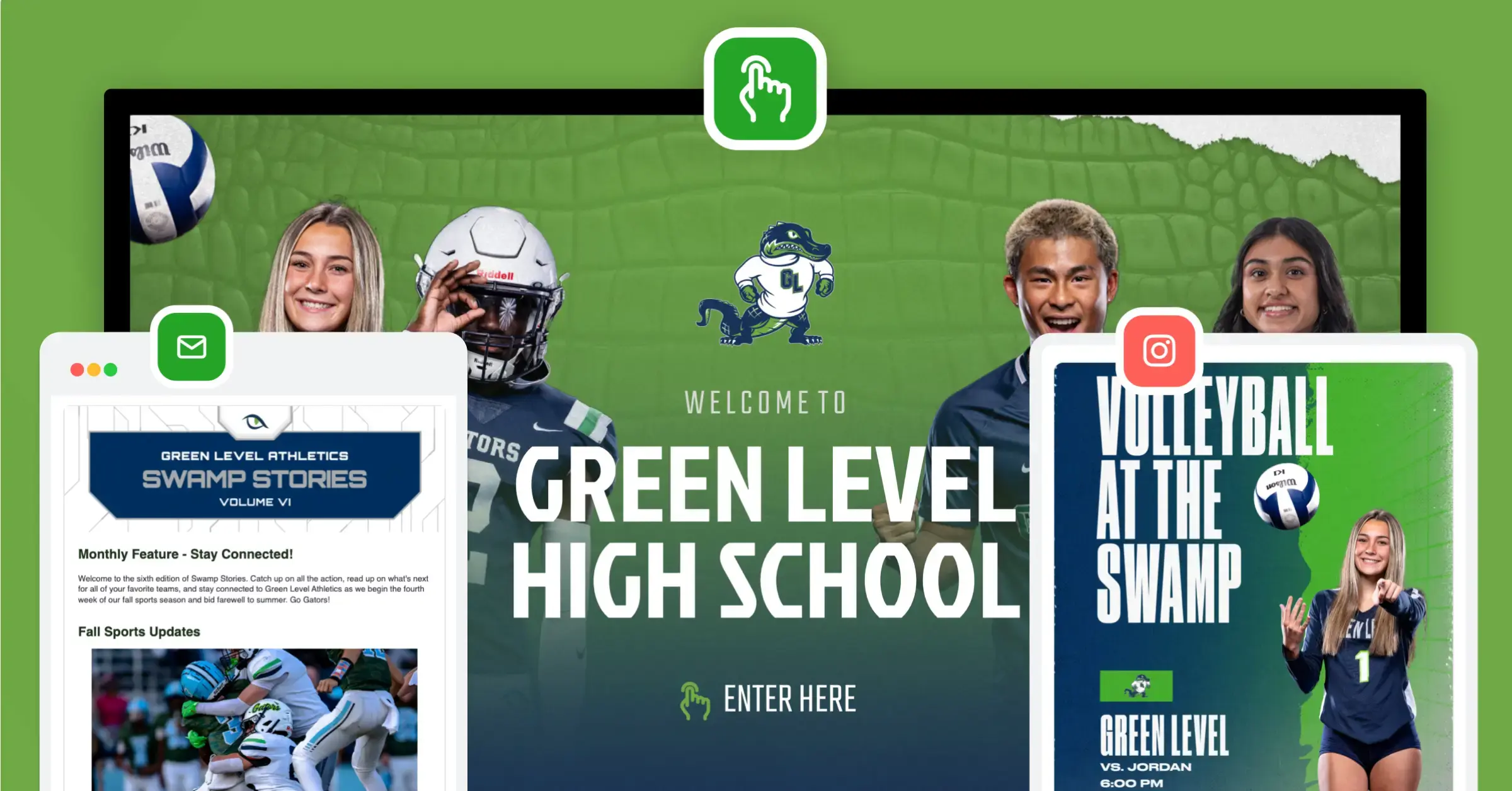
Green Level High School in Cary, North Carolina is one of the clearest examples of what intentional athletic director marketing can produce. Starting from virtually no social media presence, they built a systematic approach to digital storytelling — consistent graphics, regular posting cadence, athlete recognition content, and year-round engagement. The results?
- 1M+ total impressions in year one
- 450K monthly impressions
- 50K monthly profile visits
That's not a marketing budget. That's not an agency. That's one program deciding to take its story seriously.
How do you market a high school athletic program without adding more time or staff?
You don't need more hours in your day or people on your team. You need a system that makes the work you're already doing more visible.
The key to sustainable athletic director marketing is building routines around the moments that already happen in your program — and using technology to make those moments easier to share.
Step 1: Build Three Core Routines
- Monthly athlete recognition. Set a recurring commitment to recognize at least one athlete or team per week across your social platforms. It doesn't have to be elaborate — a graphic with their name, photo, and a one-sentence achievement is enough. This builds audience loyalty faster than almost anything else, because families share it and athletes follow your accounts to see if they'll be featured.
- Post-game score sharing. Make it automatic. Every varsity result, same format, same night. This trains your audience to check your account after games, which builds the habit and the following.
- Monthly newsletter or recap. A brief monthly update — program news, upcoming events, athlete spotlights — keeps your broader community connected even when they're not watching games. Email is still the highest-trust communication channel for parents and alumni. Use it.
Step 2: Let Technology Do the Heavy Lifting
The reason most programs don't execute consistently isn't motivation — it's friction. Creating graphics from scratch takes time. Maintaining consistent branding requires design skills most ADs don't have. Keeping track of recognition content across a dozen or more sports is genuinely hard to do manually.
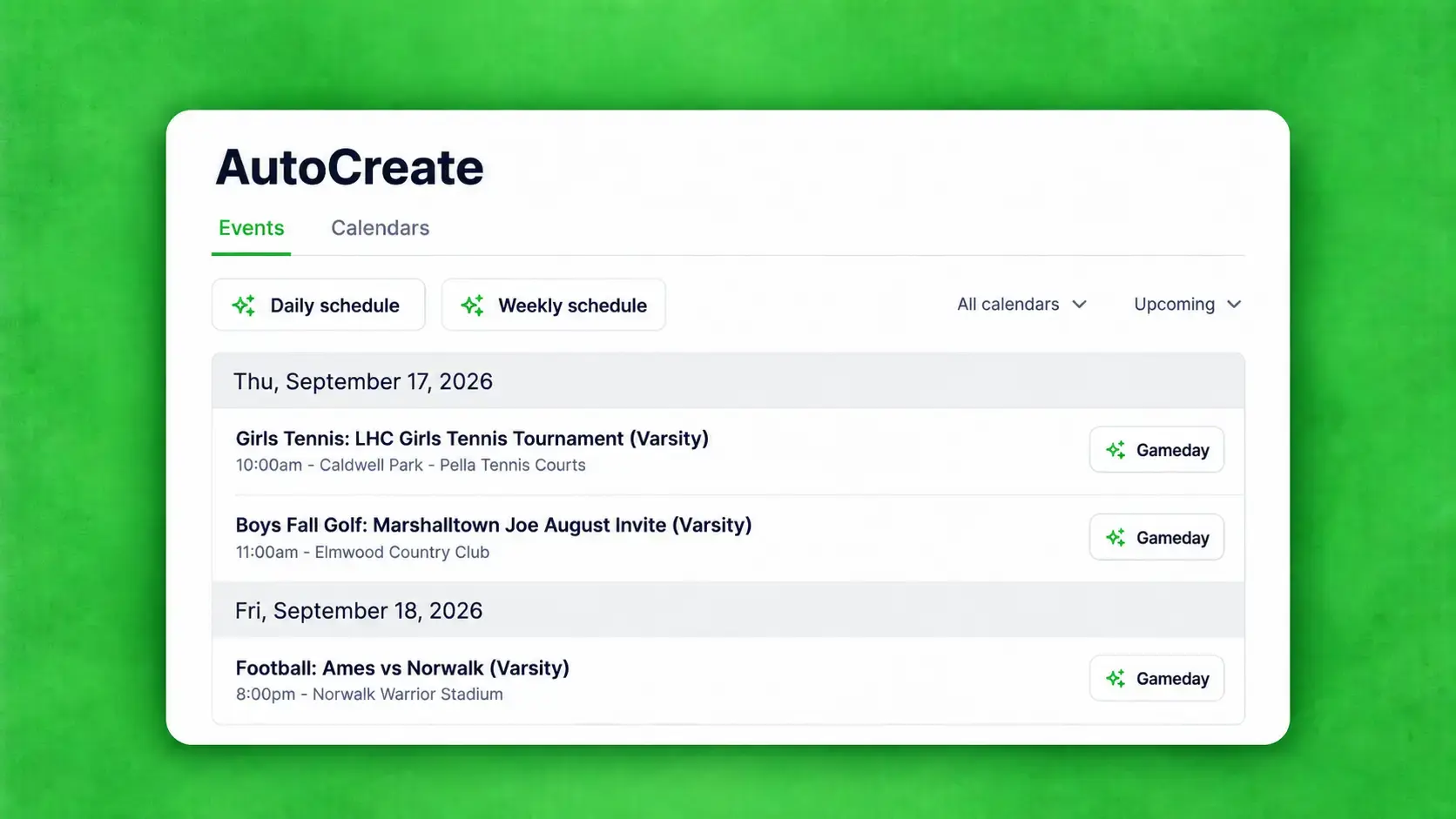
That's what tools like Gipper are built for. Gipper gives you a library of branded, sport-specific graphic templates that take minutes instead of hours to produce. Your visual identity stays consistent without a graphic designer. Your recognition workflow becomes a five-minute task instead of a production. The friction drops, the consistency goes up, and the results follow.
The programs that succeed at athletic director marketing aren't working harder than the ones that don't. They've built systems that make the right behavior the easy behavior.

Athletic Director marketing frequently asked questions
What does it mean for an athletic director to be a marketer?
It means taking ownership of how your program is perceived, communicated, and remembered in your community — especially online. An AD who thinks like a marketer is intentional about sharing stories, consistent about showing up on social media, and proactive about controlling their program's narrative. You don't need a marketing degree. You need a system and a habit.
Why is marketing now part of the AD's job?
Because the infrastructure that used to handle it for you — local newspapers, TV coverage, community word-of-mouth — has largely collapsed. At the same time, your audience has moved online. According to Pew Research, U.S. teens spend close to five hours a day on social media. If your program isn't present there, it's invisible to a generation of students, families, and future supporters.
What marketing skills does an athletic director need?
You don't need advanced marketing skills — you need a few foundational habits: consistent posting on 1–2 social platforms, a recognizable visual identity for your program's graphics, a simple athlete recognition workflow, and a monthly communication routine for parents and alumni. Most of the skills you already have — storytelling, community building, communication — are the core of what good sports marketing actually is.
How can a busy AD find time for marketing?
Build systems, not effort. The goal is to make your existing work — recognizing athletes, sharing scores, communicating with families — more visible with minimal additional friction. Tools like Gipper significantly reduce the time it takes to create professional-looking graphics. A realistic target is 30–45 minutes per week of intentional content creation, built around routines that happen whether you post about them or not.
What are the best marketing tools for athletic directors?
The most effective tools reduce friction between a moment happening and that moment getting shared. Gipper handles branded graphics and athlete recognition content. A scheduling tool like Buffer or Later lets you batch and schedule social posts in advance. Your email platform — whatever your district uses — is still the most trusted channel for parent and alumni communication. The best setup is a small, consistent stack you'll actually use.
Related articles




.webp)

