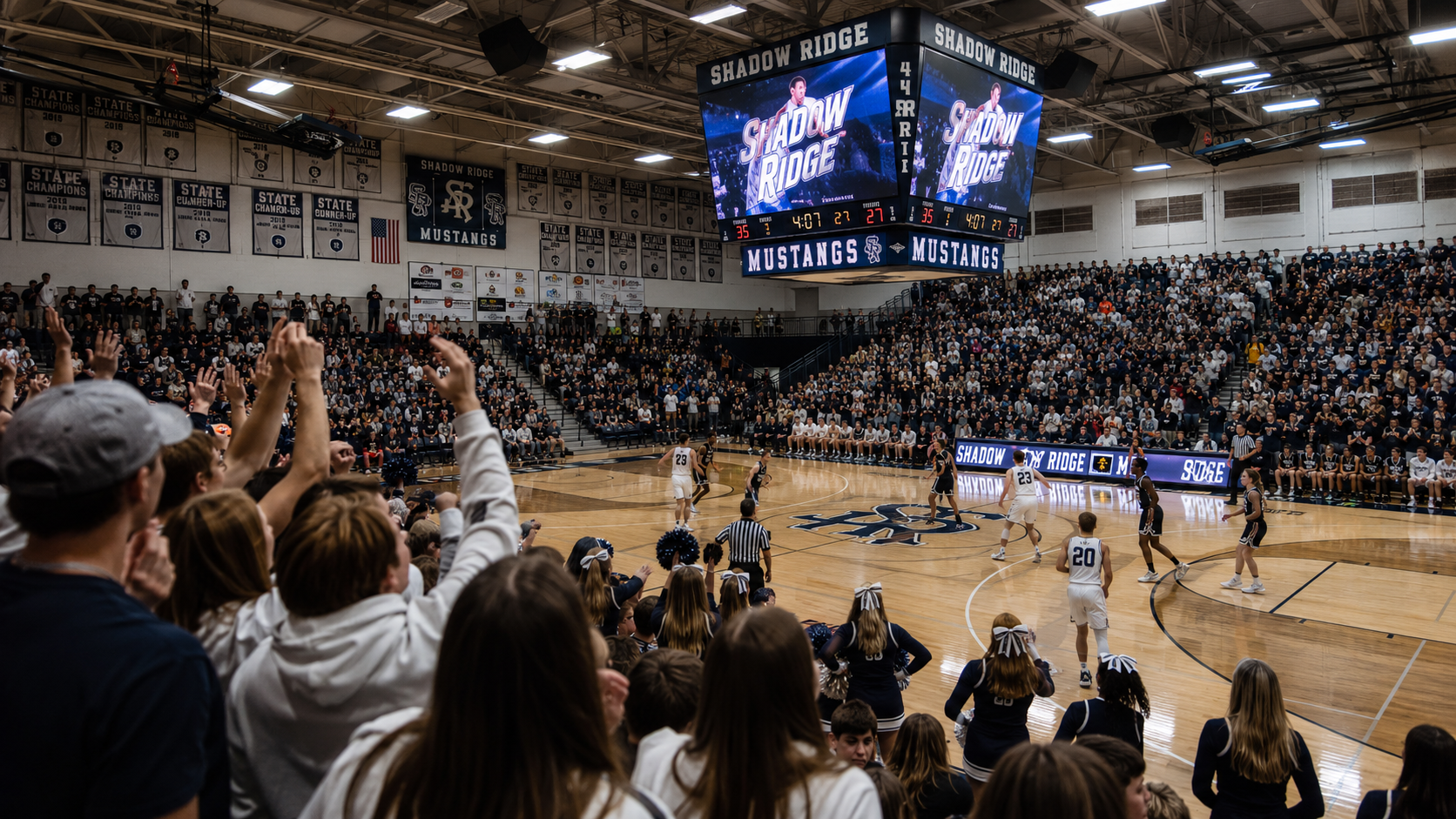
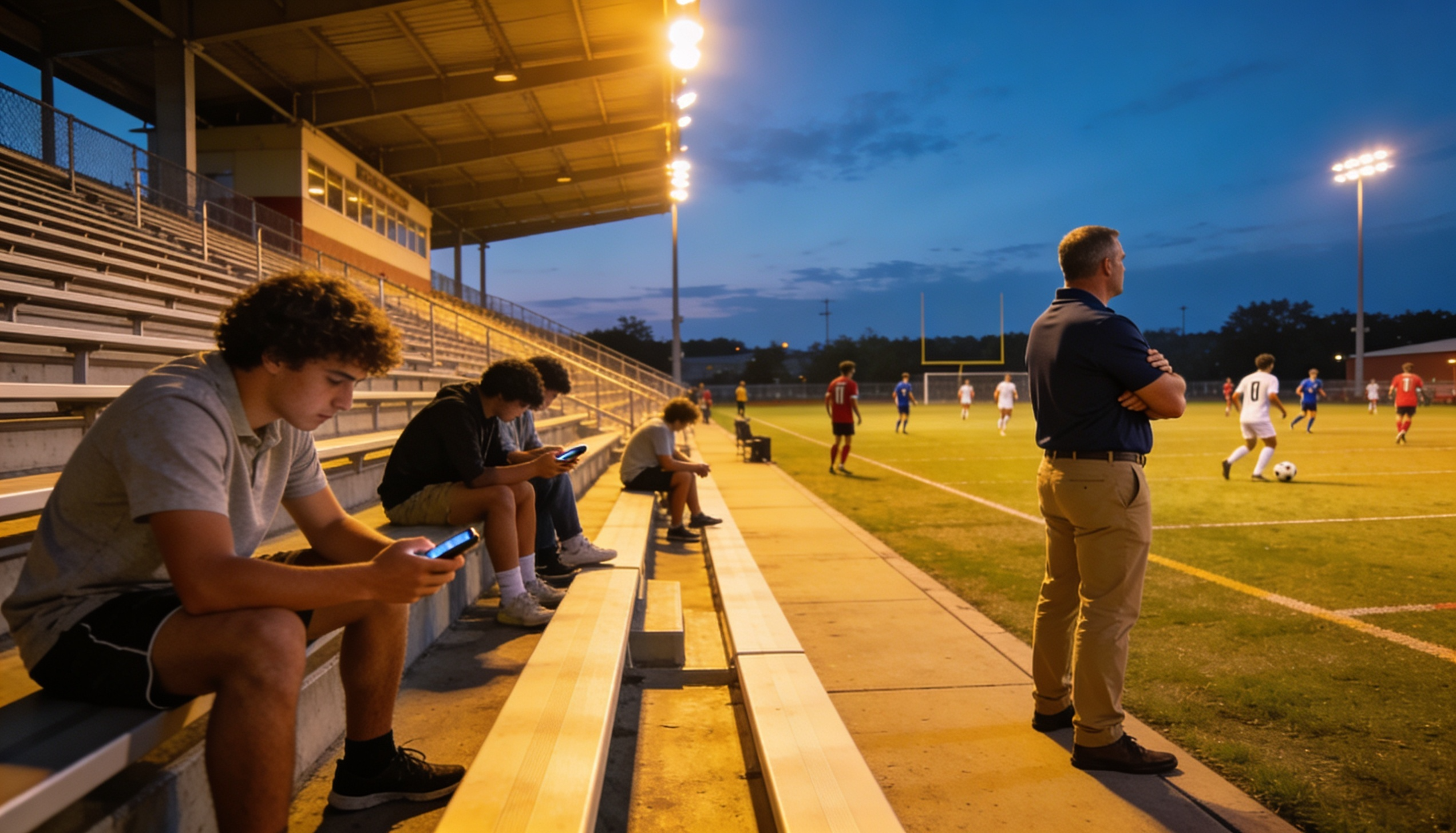
Consider everything that goes into running a high school athletic department.
There's scheduling games and practices, coordinating transportation, hiring and paying officials, managing budgets, hiring and supporting coaches, communicating with parents, organizing events, promoting teams, recognizing student-athletes, fundraising, managing facilities, and ensuring compliance with an ever-growing list of rules and regulations.
And that’s before the inevitable last-minute emergencies.
Most people who attend a high school sporting event see the game. They don't see the countless hours of work required to make that game happen.
Behind it all is an athletic director, often working with a remarkably small (or nonexistent) team, responsible for ensuring everything runs smoothly.
It's an enormous responsibility. And increasingly, an unsustainable one.
According to a National Federation of State High School Associations article, a survey of Colorado athletic directors found that 46% worked 51-60 hours per week, while another 43% worked more than 60 hours. That's far beyond a traditional workweek, often extending into nights, weekends, and time that would otherwise be spent with family.
And the problem reaches well beyond Colorado. In a nationwide survey of more than 1,100 athletic directors, 84% reported working beyond their contracted hours, 69% felt their compensation was too low compared with other positions in their districts, and 66% reported poor work-life balance. Perhaps most tellingly, when asked what would most help reduce their work-related stress, their top request wasn't a higher salary. It was additional support staff.
There’s also a broader concern: instability in the profession. A 2026 study examining athletic director turnover in Florida, found that nearly half of athletic directors holding their positions in 2021 were no longer in those positions by 2024. While the research doesn't establish why individuals left, it highlights a concerning level of instability in a role critical to school communities.
And the demands aren't shrinking. High school sports participation continues to grow, reaching a record 8.4 million participation entries nationwide in 2025–26.
We should celebrate that growth. More students participating in athletics means more opportunities to develop confidence, leadership, discipline, and lifelong relationships.
But we should also ask an important question: Are we giving the people responsible for delivering these experiences the resources they need to succeed?
Too often, I believe the answer is no.
And that's precisely why I believe artificial intelligence could be one of the most important developments for high school athletic departments in decades.
Why AI is different for high school athletic departments
There's no shortage of debate about artificial intelligence, and for good reason.
Across industries, AI raises legitimate questions about job displacement, security, privacy, and the broader consequences of technology advancing faster than institutions can adapt.
In K-12 education, the debate is particularly consequential. AI presents exciting opportunities to personalize learning, support teachers, and expand access to educational resources. But concerns about academic integrity, critical thinking, student privacy, and overreliance on technology deserve serious consideration.
My hope is that these important discussions don't inadvertently discourage schools from embracing AI in areas where the opportunities are different, and potentially extraordinary.
High school athletics is one of those areas.
Consider one of the biggest concerns surrounding AI: replacing human labor.
In many industries, AI's ability to perform work traditionally done by people introduces real questions about the future of employment.
But high school athletic departments operate under a fundamentally different set of circumstances.
They don't have an abundance of people performing work that could be automated.
Athletic departments have a shortage of people trying to accomplish more work than their resources reasonably allow.
Many departments operate with just one or two full-time administrators. Some athletic directors also teach classes, coach teams, or carry responsibilities elsewhere in the school. Budgets are tight, and hiring additional staff is often, and increasingly, out of the question.
And fundamentally, you can't replace an athletic director with AI. An essential part of the job is simply being there - in the school building, on campus, on the sidelines, and at games and events. It's building relationships with coaches, supporting student-athletes, connecting with families, and being a trusted presence in the school community. These are responsibilities that require human judgment, empathy, and physical presence. No matter how capable AI becomes, it cannot replace the human relationships at the heart of high school athletics. If anything, the more immediate threat to those relationships is the administrative workload that keeps athletic directors from spending time with the people they serve.
That's why I believe we're asking the wrong question about AI in high school athletics. Rather than asking how many people it might replace, we should be asking: How much more could athletic departments accomplish for the students and communities they serve?
And given the mounting demands on athletic directors, their already-limited resources, and the opportunities AI presents, perhaps there's an even more important question: Can high school athletic departments afford to not embrace AI?
I've experienced a version of this firsthand at Gipper, the company I founded. Like any relatively small organization, we've always had more we wanted to accomplish than the time and resources available to do it.
Today, we've built our own team of AI agents to support our organization across sales, marketing, support, operations, and more. We've also used AI to transform our product development process: helping us bring new features and improvements to customers faster than ever before possible. The result isn't simply that we're completing the same work more quickly. We're able to take on initiatives and deliver outcomes that previously would have required substantially more resources.
This experience has helped shape my conviction that AI, when applied appropriately, can be transformative for organizations operating with limited resources.
And few organizations fit that description better than high school athletic departments.
Beyond saving time: What AI makes possible
For years, technology companies serving high school athletic departments have promised the same thing: less administrative work, more time saved, and an easier life for athletic directors.
The uncomfortable truth is that much of the software serving athletic departments today simply isn't very good.
Don't believe me? Spend five minutes talking to an athletic director about the software they rely on to run their department.
You'll likely be met with groans, complaints, and frustration.
Dig a little deeper, and you'll understand why: complicated interfaces, systems that don't communicate with one another, repetitive data entry, and simple tasks that somehow require a dozen steps.
The irony? Technology designed to reduce the administrative burden has, in too many cases, become part of it.
Athletic directors are left feeling like they're working for their software rather than the other way around.
AI presents an opportunity to fundamentally change that. Not simply by introducing another tool for athletic directors to learn and manage, but by rethinking how the work gets done in the first place.
Imagine an athletic director needs to cancel a game. Today, that might mean updating multiple calendars, coordinating with transportation and officials, notifying coaches and families, and making sure everyone has the correct information. Multiple systems, multiple steps, and plenty of opportunities for something to fall through the cracks.
Now imagine simply telling an AI-powered system that the game has been cancelled. It updates the relevant schedules, prepares the necessary communications, and coordinates the administrative follow-up, with the athletic director reviewing and approving what matters.
Or imagine an athletic director being able to ask a question about their department's budget, instantly compare expenses across seasons, and identify potential savings - without manually pulling reports and piecing together spreadsheets.
These are examples of what's becoming possible when technology moves beyond simply providing tools for people to operate and begins helping them accomplish the work itself.
And importantly, this doesn't mean removing human judgment or oversight. Athletic directors still can make the key decisions, manage the relationships, and lead their programs. AI can take on more of the administrative work that surrounds those responsibilities.
But what does that additional capacity actually make possible?
Think about the responsibilities athletic directors know are important, but rarely have enough time or resources to give the attention they deserve.
What if coaches received more consistent mentorship, support, and professional development, rather than whatever time their athletic director could find between administrative responsibilities?
What if athletic directors had better visibility into participation trends, helping them identify underserved student populations, anticipate program needs, and make more informed decisions about where to invest limited resources?
What if even the smallest high school athletic departments could communicate with the consistency and professionalism of a collegiate program - keeping families informed, building community engagement, and ensuring student-athletes across all sports receive the recognition they deserve?
These aren't simply opportunities to operate more efficiently. They're opportunities to fundamentally improve the experiences athletic departments provide to their students and communities.
And unlike the traditional approach of adding more people and resources to accomplish more, AI creates the potential to expand what's possible without a proportional increase in staffing or budgets.
That's what excites me most about AI in high school athletics. It's not simply about helping get more work done. It's about redefining what's possible for athletic departments.
What high school athletic departments should demand from AI
Making the case for AI doesn't mean athletic departments should rush to adopt every product with an AI label.
The risks are real, particularly in environments involving minors and sensitive student information. Schools must be thoughtful about privacy, security, accuracy, and the decisions they delegate to technology.
But safety is only part of the equation. Athletic departments also need to understand what makes AI genuinely valuable.
Using ChatGPT or Gemini to draft an email, analyze a document, or brainstorm ideas can already save meaningful time. But that's only scratching the surface of what's possible.
The real opportunity comes when AI understands the context of an athletic department - its schedules, programs, policies, and workflows - and can help execute the work itself. Getting there may require purpose-built software, learning how to better leverage existing tools, or a combination of both.
And that's where technology providers have an enormous responsibility.
Simply adding AI to bad software doesn't make it good software.
That's a challenge to every technology company serving high school athletics, including my own. We can't simply bolt AI features onto existing products and declare victory. We need to fundamentally rethink how our product works, what it asks of athletic directors, and how much of their administrative burden it actually removes.
Athletic directors, in turn, should demand more than impressive demonstrations and promises. They should test products, evaluate their effectiveness, and ask one straightforward question: How much work will this actually take off my plate?
Ultimately, the measure of success shouldn't be how many "AI features" we introduce. It should be how much time we give back to athletic directors, how much more they're able to accomplish with that time, and how much additional work AI can take on that otherwise wouldn't get done.
High school athletics deserves better
For too long, high school athletic directors have been asked to do more with less. More responsibilities, more expectations, and more demands on their time, often without the staffing or resources to match.
That isn't sustainable. And we shouldn't accept it as an unavoidable reality of the profession.
AI presents an opportunity to change that. But realizing its potential will require athletic directors to be willing to explore new ways of working, school and district leaders to support responsible adoption, and technology providers to deliver on their promises.
The stakes go far beyond administrative efficiency.
Every hour an athletic director gets back is an hour that could be spent supporting a coach, mentoring a student-athlete, or strengthening the community that makes high school sports so special.
The goal isn't to take the human element out of high school athletics. It's to give the people who make it possible more time and capacity to do what matters most.
For the first time in a long time, doing more for our student-athletes and communities may not have to mean asking more of the people already stretched thin.
That's an opportunity worth embracing.